 Türkçe
 English

Blog
Bursa Orthognathic Surgery: Jaw Anomalies and Treatment Processes
Bursa Orthognathic Surgery: A Scientific Approach to Jaw Dysfunction and Treatment Stages
In our daily lives, basic vital functions such as chewing, speaking, and breathing depend on the harmonious coordination of the lower and upper jaw bones. Developmental or acquired anatomical differences in the positions of these bones directly affect an individual's quality of life. In cases involving only the alignment of the teeth, orthodontic treatments (braces) are sufficient, while in cases where the problem originates directly from the jaw skeleton, surgical intervention becomes a medical necessity.
Orthognathic surgery, commonly known as jaw surgery, is a medical procedure performed to correct shape, position, and proportion disorders in the facial skeleton. In Bursa orthognathic surgery processes, patients are treated through the joint work of specialized jaw surgeons and orthodontists. This article addresses the medical stages of the orthognathic surgery process, patient expectations, and the recovery process transparently within the framework of legal information rules.
What Is Orthognathic Surgery (Jaw Surgery)?
The word orthognathic is derived from the combination of the Greek words "orthos" (straight, correct) and "gnathos" (jaw). As the name suggests, the main purpose of this medical intervention is to bring the jaw bones to their ideal anatomical positions. The upper jaw (maxilla) and lower jaw (mandible) skeletal structures must work in functional integrity. If one jaw is excessively forward, backward, or asymmetrically positioned relative to the other, it causes significant strain on the jaw joint (Temporomandibular Joint).
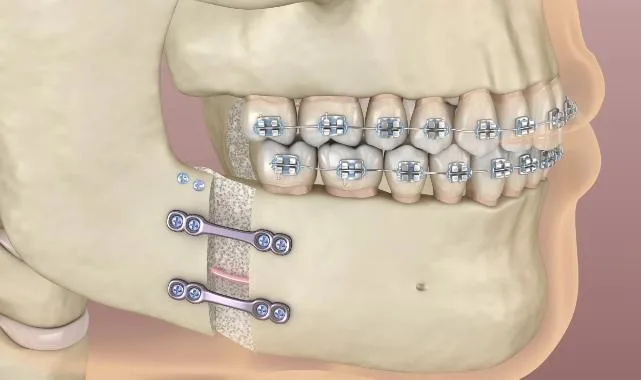
At this stage, Oral and Maxillofacial Surgery comes into play, one of the disciplines of dentistry. Physicians identify the skeletal problem in light of detailed radiological imaging. During the operation, incisions (osteotomy) are made in the jaw bones in the planned proportions, the bones are moved into the correct positions, and fixed with titanium plates and screws.
In Which Medical Conditions Is Jaw Surgery Needed?
Mismatches in the jaw bones usually become apparent during growth spurts in adolescence. In adults who have completed their growth and development, treatment of skeletal problems is only possible with surgical methods. The indications for orthognathic surgery generally arise in the following conditions:
Lower Jaw Positioned Forward (Mandibular Prognathism): This is a condition in which the lower jaw grows more than the upper jaw. In these cases, the lower incisors are positioned in front of the upper incisors. Chewing function becomes significantly difficult.
Lower Jaw Positioned Backward (Mandibular Retrognathia): This occurs as a result of underdevelopment of the lower jaw or excessive growth of the upper jaw. Lower jaw deficiency, especially during sleep, narrows the airway and creates a basis for sleep apnea (OSAS).
Open Bite: This is the condition in which, when the mouth is closed, a gap remains between the front teeth even though the back teeth touch. Patients cannot bite or tear food with their front teeth. In addition, they experience problems producing certain sounds during speech (lisping).
Facial and Jaw Asymmetries: Midline shifts occur as a result of the right or left side of the jaw developing more or less than the other side.
Excessive Gum Display in the Smile (Gummy Smile): This occurs when the upper jaw sags more than normal vertically. It prevents the lips from closing fully and leads to constant mouth breathing.
How Does the Orthognathic Surgery Process Work in Bursa?
Orthognathic surgery is a long-term treatment journey carried out not by a single physician, but by a multidisciplinary team. At every stage of the process, the orthodontist and jaw surgeon act in coordination. In Bursa orthognathic surgery planning, physicians such as dtgoktugsinaokan shape the medical protocols of the treatment according to the patient's physiological structure. The process basically consists of three main stages:
1. Pre-Surgical Orthodontic Preparation
After the decision for surgical operation is made, orthodontic treatment is first applied to the patient. Due to the current mismatched position of the jaws, over the years the teeth try to compensate and line up at incorrect angles. These incorrect angles are corrected with braces applied before surgery. The teeth are aligned so that, once the jaws are brought into the correct position after surgery, they fit together perfectly. This preparation period lasts on average 12 to 18 months depending on the patient's condition.
2. Surgical Intervention Stage
When the teeth have reached the desired position, the surgical stage begins. The operation is performed in a fully equipped hospital environment under general anesthesia. Since the incisions are made entirely inside the mouth, no surgical scar remains on the patient's face. The surgeon moves the lower jaw, upper jaw, or both if necessary (double jaw surgery) according to the planned measurements and fixes them in their new positions. Depending on the scope of the operation, the procedure takes between 2 and 4 hours.
3. Post-Surgical Orthodontic Adjustments
After surgery, while the jaw bones heal in their new positions, braces treatment continues for a while longer to make fine adjustments. This final stage usually lasts 4 to 6 months. With the removal of the braces, treatment is fully completed.
Recovery Period After Surgery and Nutrition Rules
After orthognathic surgery, patients face a recovery period that requires attention and patience. Due to the nature of medical procedures, swelling (edema) in the face, especially around the cheeks and lips, is an expected condition after surgery. Swelling usually reaches its peak on the 3rd day after the operation and gradually decreases and disappears over the following weeks.
During this period, nutrition is of great importance for the bones to heal properly. Patients should consume only seedless and liquid foods (broth, fruit juice, milk, special nutritional solutions) for the first few weeks. Since chewing force may jeopardize bone healing, the transition to solid foods is made gradually with the physician's approval and guidance.
Oral hygiene is another critical issue to prevent infection in the surgical area. Mouth rinses prescribed by the physician should be used without interruption to keep the stitches inside the mouth clean, and tooth brushing should be performed using the careful methods shown by the physician.
Functional Benefits of Jaw Surgery for Health
Orthognathic surgery planning is carried out not only to change appearance, but primarily to restore vital functions. Patients who suffer from sleep apnea due to narrowing of the upper airway gain comfortable breathing when the lower jaw is surgically brought forward. Proper breathing positively affects the entire body system, from heart health to your daily energy.
In addition, with the teeth brought into proper occlusion, patients become able to chew food thoroughly. This improvement in the mouth, the first stage of the digestive system, also helps prevent stomach and intestinal problems. Furthermore, correct jaw closure removes the excessive load on the TME (jaw joint), largely preventing sounds from the jaw joint and headaches.
Health Services Information and Warning Notice
This article has been prepared in strict compliance with the rules of the "Regulation on Promotional and Informational Activities in Health Services" solely to inform the public and provide a general framework regarding medical processes. The information contained herein does not, under any circumstances, replace diagnosis or treatment advice.
Orthognathic surgery is a major surgical operation performed under general anesthesia and, like any surgical intervention, carries medical risks such as bleeding, infection, and temporary or permanent loss of sensation. Every patient's bone structure, healing capacity, and response to treatment are completely individual. Therefore, it is very important not to form your own treatment expectations based on general information on the internet. For the correct diagnosis of your problems and to determine the most suitable treatment method for you, you must consult a fully equipped healthcare institution and be examined by a specialized physician.