 Türkçe
 English

Blog
Why Does the Jawbone Shrink After a Tooth Is Extracted?
Dr. Dt. Göktuğ Sina Okkan
4 read
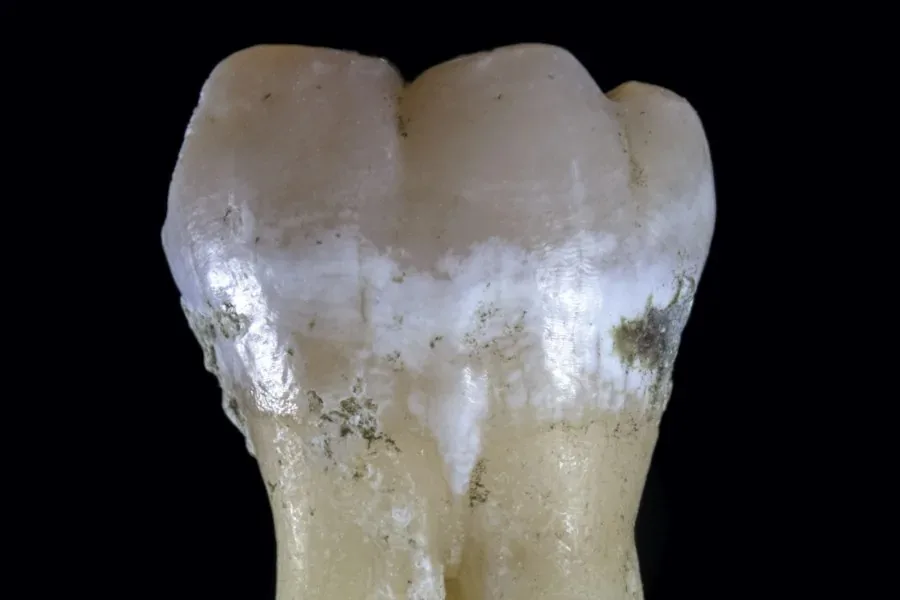
Bone remains as long as it's used
The force transferred from a tooth's root to the bone during chewing sends a constant signal to bone cells. When a tooth is extracted, that signal stops and the body starts resorbing the now-unused tissue — this is called resorption.
How fast is the loss?
Loss is fastest in the first year: the extraction site's width shrinks by roughly 25% on average.
Knock-on effects
- Neighbouring teeth tilt.
- The opposing tooth over-erupts.
- Lower face height decreases.
- Load increases on the jaw joint.
Ways to prevent resorption
Socket preservation: placing graft material in the socket at extraction preserves most of the bone volume. Early implant: an implant transfers chewing force back to the bone, stopping resorption.
What if it's too late?
Lost bone can be regained with graft and membrane techniques; this extends treatment by a few months.